
How video surveillance helps businesses fight customer extremism
Most retailers are familiar with traditional threats such as shoplifting or organized retail crime. But in recent years, another category of losses has been growing quietly — losses caused not by criminals breaking into stores, but by customers exploiting the system.
Practices such as friendly fraud, return abuse, and even digital extortion are becoming increasingly common. In many cases, these incidents appear at first to be ordinary customer complaints. Only later does it become clear that the situation may involve deliberate manipulation of refund policies, dispute procedures, or reputation pressure.
For businesses with physical locations — retail stores, warehouses, pickup counters, service desks — modern video surveillance has become an important tool for dealing with these challenges. Properly deployed, it goes beyond simply recording what happens in the point of business. Instead, it provides actionable documentation that helps resolve disputes and protect the company, its assets, and its employees.
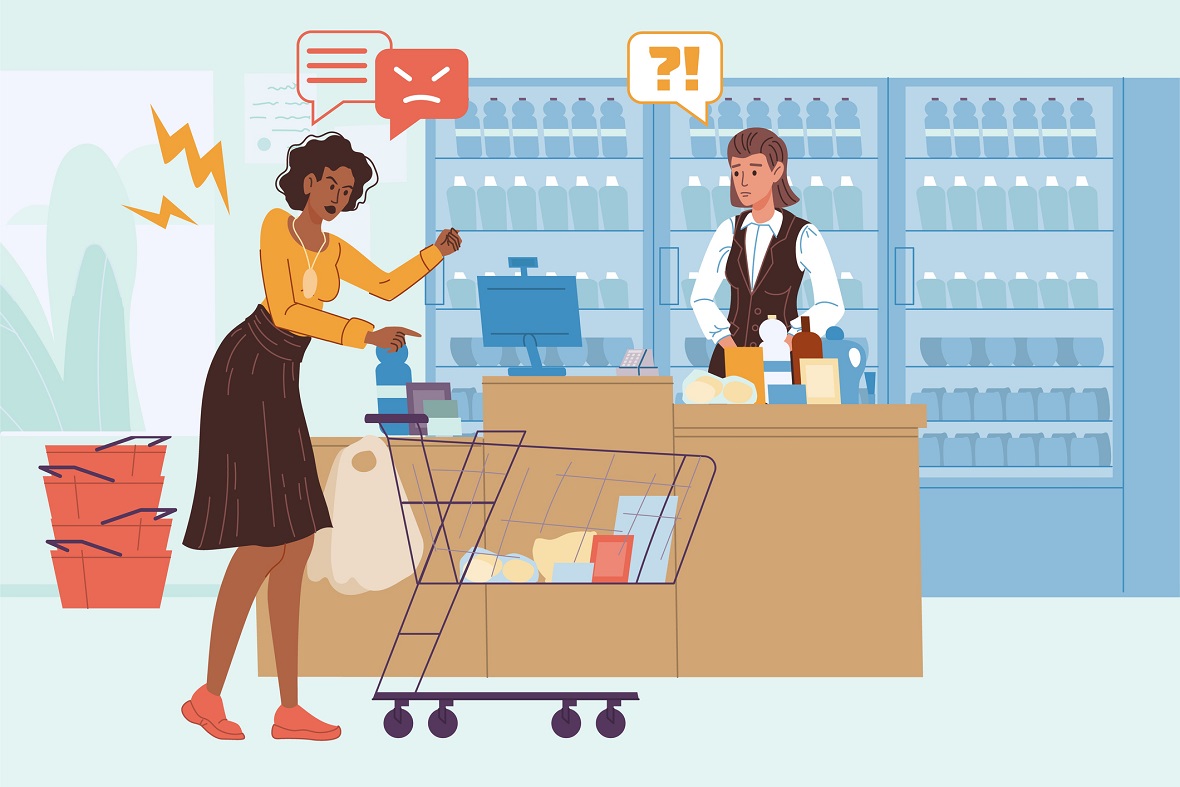
Types of customer extremism
Most companies design their return policies and dispute processes to reduce friction and build trust with customers. But these same policies can also be exploited.
For example:
- A buyer claims they never received a product that was handed over at the counter.
- A returned item shows signs of use, but the customer insists it was defective from the beginning.
- A dispute escalates with threats of negative reviews unless a refund is issued.
- An employee is accused of misconduct after refusing an invalid return.
Without clear evidence, many businesses feel forced to resolve such situations in favor of the customer, simply to avoid reputational damage or escalation. However, over time, these small concessions can add up to significant losses.

Why old methods are not enough anymore
Retail systems already record a large amount of information — receipts, payment confirmations, timestamps, and inventory logs. But this data alone does not always capture the full story. When a dispute arises, the key question is often not what was sold, but what actually happened during the interaction.
Did the employee hand the item to the customer? Was the product damaged before the return or after it left the store? Were full terms and conditions voiced in the conversation at the service counter?
These details matter — and this is where video surveillance provides an additional layer of clarity.
Video surveillance as a source of unbiased evidence
Video recordings allow businesses to review events exactly as they occurred. When a complaint or dispute appears, managers can see how the situation unfolded in reality.
Footage from service counters, checkout zones, or pickup areas can confirm:
- whether a product was handed to the customer;
- the visible condition of an item at the moment of sale or return;
- the sequence of actions during a disputed transaction;
- what words have been said and in what tone;
- the behavior of both staff and customers.
Often, the ability to review what actually happened is enough to resolve a dispute quickly and fairly.

Reducing return abuse
Return abuse has become a growing problem for retailers, particularly in industries where products can be used briefly and then returned. Examples include customers returning worn clothing, used electronics, or items that have clearly been opened and repackaged.
Video monitoring at return desks allows businesses to document the condition of products at the moment they are brought back. It also records the interaction between the employee and the customer — including explanations given during the return process.
Just as importantly, the presence of cameras often discourages fraudulent returns before they even happen. An additional effect is that the automated face recognition systems allow to flag a person that has been known for abusive behavior in the past, and put in extra attention when they are seen again – for example, videotaping the condition of the new item they are about to purchase.
Handling friendly fraud disputes
Friendly fraud — where a customer disputes a legitimate purchase — is another challenge. It frequently occurs in situations where a product is collected in person: at pickup counters, parcel lockers, or retail service points.
When a customer later claims the item was given to someone else instead, video footage can clarify the situation. Cameras covering pickup areas make it possible to verify who collected the item and when the transaction took place.
In many cases, simply confirming these details is enough to close the dispute.
EXAMPLE
A customer purchased an expensive jacket at a clothing boutique and then filed a chargeback with their bank, claiming the item was never received. The store, however, had footage from their entrance camera clearly showing the customer walking out with the branded bag in hand — timestamp and all. When the bank requested evidence, the store submitted the recording, the chargeback was reversed, and the customer quietly dropped the dispute.
Protecting employees from false claims
Customer service agents are often the first people to face customer frustration when policies are enforced. While most complaints are legitimate, false accusations do occur — particularly when a refund is denied.
Video documentation helps managers assess such situations fairly. By reviewing the interaction, they can determine whether procedures were followed correctly and whether the employee behaved professionally.
This not only protects the business but also reassures staff that their actions will be evaluated based on facts rather than assumptions.
EXAMPLE
A consumer electronics retailer successfully thwarted a ‘box swap’ fraud attempt using Xeoma’s high-definition archives. A customer attempted to return an older, broken camera model just days after purchasing a premium version of the same brand. Upon reviewing the footage, the store confirmed the exact moment of purchase, clearly showing the high-end product being unboxed and inspected. When presented with this video evidence, the customer immediately withdrew the fraudulent return request.
Besides reviewing video footage post factum, video surveillance systems can notify management of an escalating conflict based on emotion recognition.
Responding to reputation pressure
In the age of online reviews and social media, some disputes escalate into reputation pressure. A customer may threaten negative reviews or public complaints in order to force a refund or compensation.
When a company has clear documentation of what actually happened, it becomes much easier to respond calmly and confidently. Instead of reacting under pressure, management can rely on verified information.
This changes the balance of the conversation.
EXAMPLE
After completing a ride, a taxi driver asked the passengers to pay the fare, but they responded that they would either leave without paying or post a negative review about the driver and the service. The driver calmly informed them that the vehicle was equipped with onboard video surveillance that recorded the cabin and the conversation. Realizing that their refusal to pay and the threat could be documented and reported to the service, the passengers quickly abandoned the attempt and paid the fare.

Beyond recording: the role of intelligent video systems
In many cases, the mere presence of video cameras and video footage is already enough to deter problematic behavior. However, modern video surveillance systems go far beyond that. They are no longer limited to passive recording or basic activity monitoring. Many platforms now include analytics that help optimize processes in sensitive areas such as service desks, returns counters, and pickup points.
In addition to familiar tasks like customer counting, attention analysis, or detecting queues and incidents, these tools can help identify returning customers with a history of customer extremism — for example, individuals repeatedly attempting questionable returns – or flag those spending unusually long periods in transaction areas.
This allows businesses to spot potential issues at an early stage, take preventive measures where appropriate, and approach disputes or suspicious situations with greater preparedness and confidence.

Benefit customers, not target them
It is important to remember that surveillance is not meant to treat customers as suspects. In practice, it often benefits honest customers as much as it protects the business.
Video surveillance is a powerful tool for improving service quality, transparency, and internal processes. For example, the Voice-to-Text feature in Xeoma helps ensure that important information is communicated clearly and without misinformation. It can automatically transcribe conversations between staff and customers, eliminating the need for managers to be physically present or spend hours reviewing recordings. To make this process even more efficient, the system can react to key phrases — or their absence — giving managers a practical way to identify gaps in communication, address mistakes, and continuously improve employee training.
Video surveillance benefits whoever tells the truth: with video footage accurately reflecting what actually happened, employees feel safer in their roles, and customers know that complaints will be evaluated fairly.
In conclusion
Customer-focused policies are essential for modern retail and service businesses. But in an environment where some individuals actively exploit those policies, companies need tools that help them maintain balance.
Video surveillance provides that balance. By documenting transactions, protecting employees, and offering a clear record of events, it helps businesses respond to disputes with confidence while continuing to provide excellent service to legitimate customers.
Try Xeoma for free! Enter your name and your email to send the license to in the fields below, and click the ‘Get Xeoma free demo licenses to email’ button.
We urge you to refrain from using emails that contain personal data, and from sending us personal data in any other way. If you still do, by submitting this form, you confirm your consent to processing of your personal data
June 5, 2026
Read also:
Video surveillance for business and major systems
Xeoma Pro and Video Analytics (PDF)
Modern video surveillance in shopping malls (Video)